Our AI hardware solutions are engineered for seamless integration with modern AI frameworks,
ensuring
maximum compatibility and efficiency. We offer high-speed memory modules,
advanced cooling systems,
and
power-efficient architectures to support real-time data processing,
AI model training, and
inference
tasks.
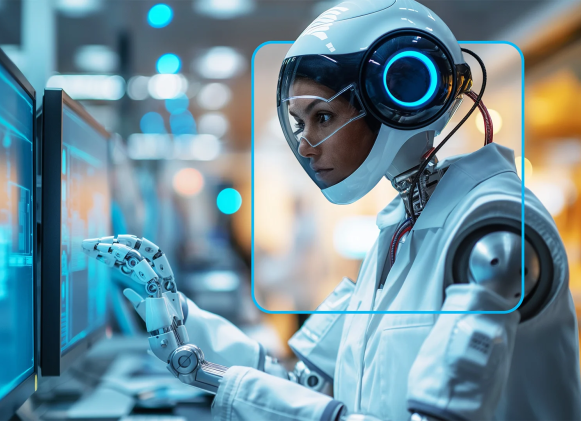
Eminent Solutions offers a comprehensive range of AI hardware components, including high-performance GPUs, TPUs, accelerators, and specialized processors designed to meet the computational demands of deep learning, machine learning, and neural network applications. Whether you are building AI servers, workstations, or embedded systems, we provide cutting-edge hardware solutions tailored to optimize performance, efficiency, and scalability.
Edge AI uses artificial intelligence directly within a device, computing near the data source rather than in an off-site data center with cloud computing. Edge AI offers reduced latency, faster processing, a reduced need for constant internet connectivity, and can lower privacy risks. This technology represents a significant shift in how data is processed, impacting a wide range of technologies, from consumer applications to advanced vehicle functions to factory automation.
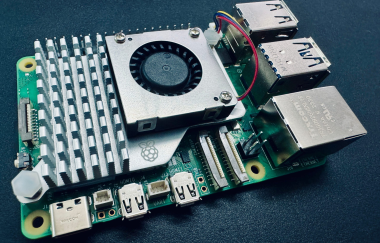
Edge AI implementations generally run on microcontrollers, FPGAs, and single board computers (SBCs).
High-speed cameras with machine learning models are used for supply chain processes like locating products within a warehouse or identifying defective products in a production line.
Intelligent Processing at the Edge for Real-Time Decision-Making – Enables low-latency AI computations directly on devices, reducing dependence on cloud processing.
Generative AI, with its intensive training demands, is driving a profound transformation across
various technologies and hardware ecosystems. As AI models grow more complex, they require
increasingly powerful computing infrastructure, reshaping supply chains and accelerating
advancements in high-performance processors, memory, and storage solutions.
This surge in AI-driven innovation is not only redefining hardware capabilities but also unlocking
new possibilities across industries, from automation and design to scientific research and real-time
data processing.
One way AI can improve railways is through its ability to monitor individual trains and
infrastructure. It gives me the chance to get early information about a breakdown, even
timing for when it will happen.
As AI becomes integrated into more rail systems, machine learning processes have larger data
sets from which to draw upon to make recommendations for future rail improvements as well as
current performance factors.
The rail industry and the transport sector are becoming increasingly digital. We are
currently adapting the M12-X-coded connectors for the specific applications in these target
markets.
Generative AI is revolutionizing the technology landscape, driving unprecedented advancements
in computing and hardware infrastructure. With its massive training workloads, it demands
high-performance GPUs, TPUs, and specialized accelerators, reshaping supply chains and
pushing the boundaries of processing power, memory, and data storage.
This rapid evolution is fueling innovation across industries, enabling breakthroughs in
automation, content creation, scientific research, and real-time analytics. As AI models
grow more complex, the need for efficient, scalable, and energy-optimized hardware solutions
continues to rise, paving the way for the next generation of intelligent computing.